
The Power of Dua Istikhara: A Comprehensive Guide to Divine Guidance

In the journey of life, every individual stands at a crossroads where the path ahead seems blurred. Human intellect, no matter how sharp, is limited by the present moment. We cannot see the future consequences of our choices. Whether it is about selecting a career path, choosing a life partner, entering a business contract, or making a significant move, the weight of decision-making can be overwhelming. This is where the profound practice of Dua Istikhara serves as a spiritual compass for millions of Muslims worldwide. It is not just a ritual; it is a direct conversation with the Creator, the Knower of the Unseen (Al-Alim).
What is Dua Istikhara?
The term Istikhara is derived from the Arabic root word Khair, which means “goodness.” Literally, Istikhara means “to seek goodness” or “to ask for the best.” In the Islamic tradition, it is a specific prayer offered to Allah when a person is faced with a choice between two or more permissible (Halal) options.
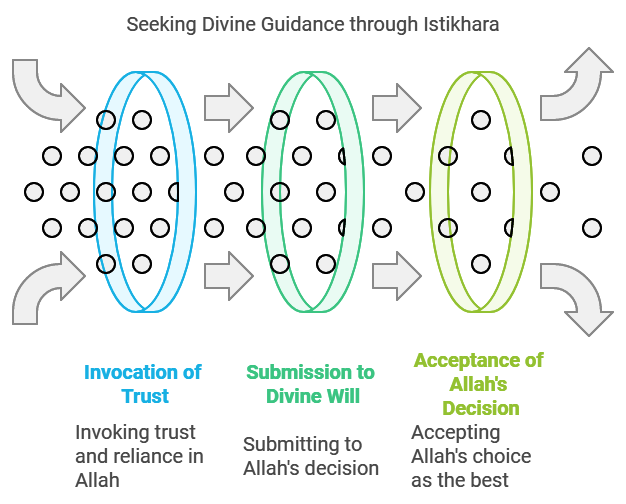
It is crucial to understand that Dua Istikhara is not a magical formula to get what you want. Instead, it is an act of total submission. By performing this prayer, a believer says, “O Allah, I am limited, but You are Infinite. I am flawed, but You are Perfect. Choose for me what is best for my soul and my worldly life.”
The Significance of Dua E Istikhara in Daily Life
The significance of Dua E Istikhara lies in the psychological and spiritual relief it provides. In a world full of anxiety and second-guessing, Istikhara offers a “Safety Net.
1. Connection with the Divine
It reinforces the belief that Allah is involved in our daily affairs. It transitions a person from a state of confusion to a state of Tawakkul (Reliance on Allah).
2. Eliminating Regret
One of the greatest benefits of the Dua for Istikhara is the elimination of future regret. When a believer makes a decision after seeking Allah’s counsel, they find peace in the outcome—even if it isn’t what they initially hoped for—because they know Allah has diverted them from a hidden harm.
3. Intellectual Humility
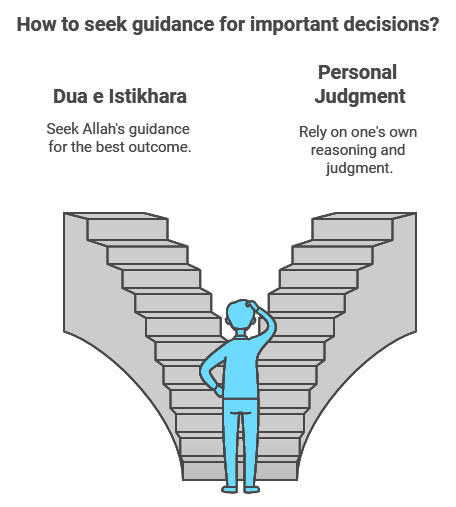
It teaches us that our logic is a tool, but it is not absolute. By reciting the Dua Istikhara, we acknowledge that only Allah knows the long-term impact of our decisions.
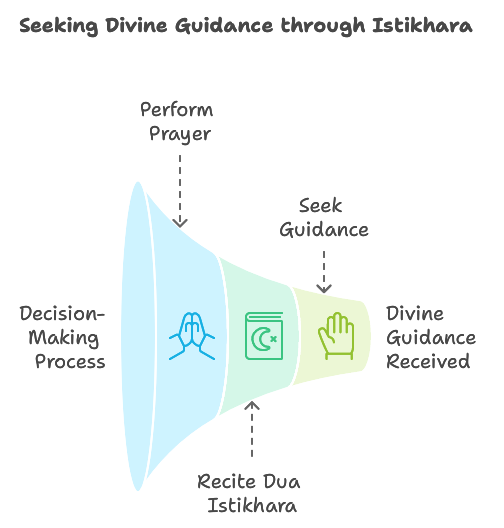
Step 1: The Niyyah (Intention)
Before you start, ensure your heart is clear of any bias. Do not perform Istikhara if you have already firmly decided on one option and are just looking for a “rubber stamp” from Allah. Your heart must be open to any result.
Step 2: The Two Rak’ahs
Perform two Rak’ahs of non-obligatory (Nafl) prayer. It is recommended to recite Surah Al-Kafirun in the first Rak’ah (emphasizing the rejection of all but Allah) and Surah Al-Ikhlas in the second (emphasizing the Oneness and Self-Sufficiency of Allah).
Step 3: The Recitation of the Dua
After the Taslim (completing the prayer), stay seated. Raise your hands in supplication and recite the Dua E Istikhara. When you reach the part of the Dua where you mention the matter, state your concern clearly in your heart or tongue (e.g., “this marriage proposal” or “this job offer”).
Step 4: The Timing
While you can perform Istikhara at any time, many scholars suggest the time of Tahajjud (the last third of the night) because of the spiritual tranquility and the high probability of Dua acceptance during that time.
The Text and Meaning of Dua E Istikhara
The words taught by the Prophet ﷺ are profound and encompass every aspect of a human’s well-being.
The Arabic Text:
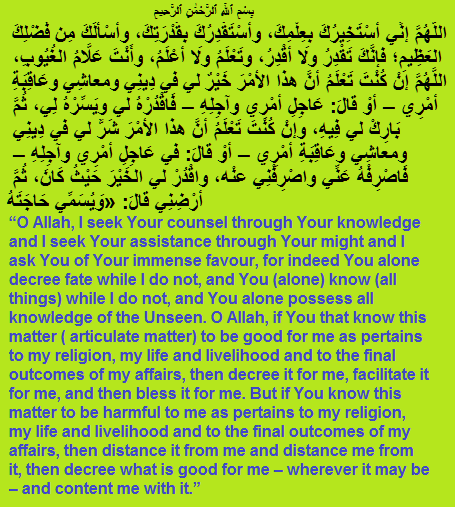
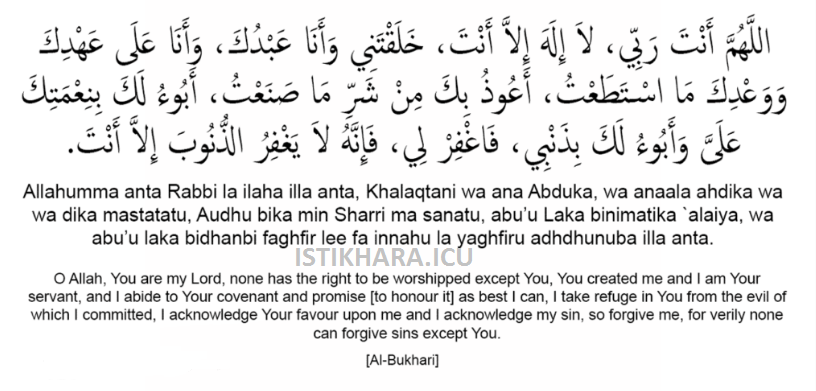
اللَّهُمَّ إِنِّي أَسْتَخِيرُكَ بِعِلْمِكَ وَأَسْتَقْدِرُكَ بِقُدْرَتِكَ وَأَسْأَلُكَ مِنْ فَضْلِكَ الْعَظِيمِ…
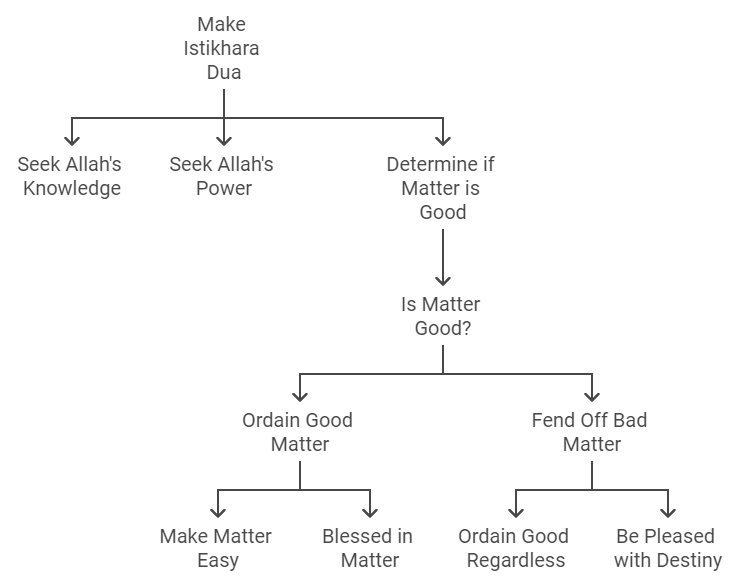
The English Translation: “O Allah, I seek Your counsel through Your knowledge and I seek help through Your Power and I ask You for Your great favor, for You have power, and I am powerless, You have knowledge, and I know not… O Allah, if in Your knowledge this matter is good for my religion, my livelihood, and my end, then ordain it for me, make it easy for me, and bless me in it. And if in Your knowledge this matter is bad for me… then turn it away from me and turn me away from it, and ordain for me the good wherever it may be.”
This Dua is a complete surrender of one’s ego to the Divine Will.
Common Misconceptions About Dua Istikhara
There are several myths surrounding Istikhara Dua that often lead to unnecessary confusion.
Myth 1: “I must see a dream.”
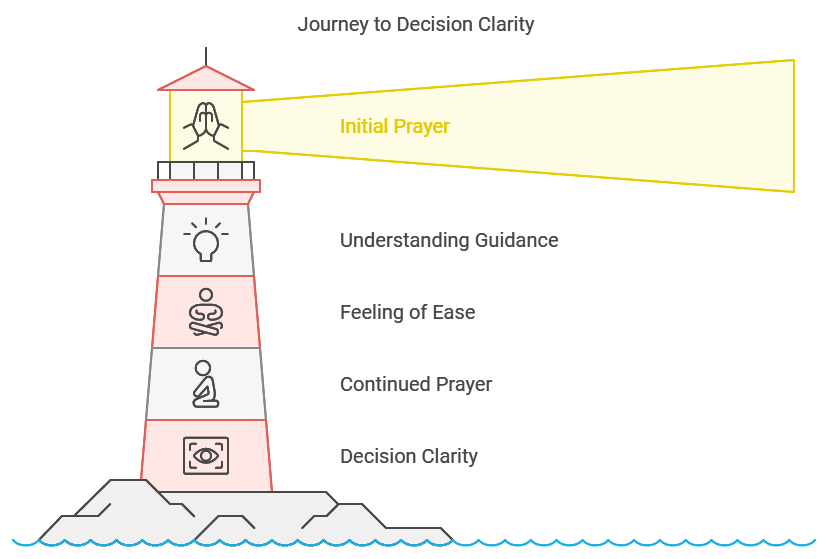
Reality: This is perhaps the most common misconception. Guidance after Istikhara does not necessarily come in the form of a dream or a “color” (like green or white). Instead, guidance usually manifests as:
- A feeling of contentment or inclination toward one choice.
- The opening or closing of doors (circumstances making the task easy or impossible).
- Sudden clarity in one’s logic.
Myth 2: “Someone else can do it for me.”
Reality: While you can ask others to make Dua for you, the Sunnah is for the person facing the dilemma to perform the Istikhara themselves. It is a personal connection between the slave and the Master.
Myth 3: “It is for major decisions only.”
Reality: The companions of the Prophet ﷺ used to perform Istikhara for even the smallest matters, like buying a pair of shoes. No matter is too small for Allah’s guidance.
Conclusion: Living with Clarity
Dua Istikhara is more than just a prayer; it is a lifestyle of clarity. It bridges the gap between human effort and divine decree. When you combine your best research and consultation (Shura) with the spiritual anchor of Dua E Istikhara, you move forward with a heart that is light and a mind that is focused.
By utilizing the Dua for Istikhara, a Muslim acknowledges that true success is not just achieving a goal, but achieving a goal that has Allah’s blessing (Barakah) in it. Whether the outcome is an open door or a closed one, a believer says “Alhamdulillah,” knowing that the best of planners has taken charge of their affairs.







Leave a Reply